
Case study · 4 min read ·
The hidden cost of compliance training nobody reads
A look at four Indian NBFCs and how moving from PDF + tracker spreadsheets to a system that tracks validity, not just completion, cut their compliance audit prep time by 80%.

Shreya Malot
Chief Operating Officer, HabileLabs

Compliance training has a strange accounting problem: the cost that shows up in the budget — content, licenses, trainer hours — is the small part. The big part is invisible until an auditor asks for evidence. We sat down with four Indian NBFCs that moved from PDFs and tracker spreadsheets to a structured LMS, and added up what the old way was really costing them.
The cost nobody budgets for
All four NBFCs ran what we call the PDF-and-prayer model: policy documents on a shared drive, an email asking everyone to read them, and a spreadsheet where branch managers ticked names off. On paper this costs almost nothing. In practice, here is where the hours went:
- Audit prep. Two analysts spending three to four weeks a year reconstructing who completed what, when — from email threads and spreadsheet versions.
- Chasing. Branch managers spending hours each cycle following up with the same overdue people, with no visibility into who had even opened the document.
- Re-training. With no completion records they could defend, two of the four firms simply re-ran the entire training for everyone before each audit. Twice the seat time, every year.
The number that got the CFO's attention
One mid-size NBFC estimated 1,900 person-hours per year went into compliance training administration — not learning, administration. That is roughly one full-time employee doing nothing but moving names between spreadsheets.
What changed with a structured LMS
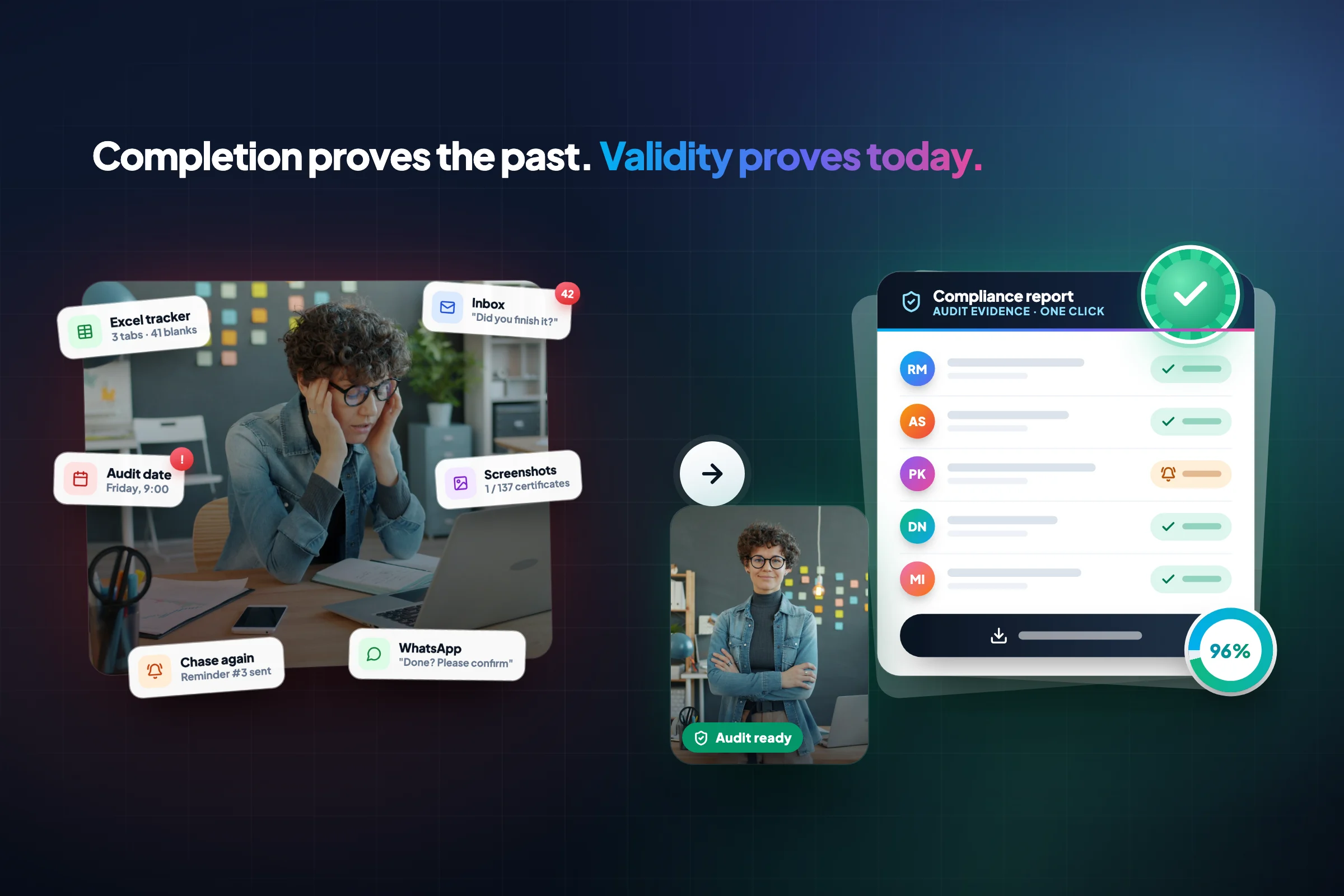
The switch itself was less dramatic than the teams expected. The same KYC, AML and fair-practice content moved into Learnify as short modules with completion tracking, rolling 30-day windows replaced the annual deadline, and every completion started writing into an immutable, timestamped audit log.
Three mechanisms did most of the work:
- Automatic evidence. Every assignment, attempt and attestation is recorded the moment it happens. Audit prep stops being archaeology.
- Targeted nudges. Reminders go only to people who are actually behind, escalating to managers in a weekly digest. The chasing workload collapses.
- Verifiable certificates. Each certificate carries a public verification URL, so auditors can sample and validate without asking the L&D team for anything.
The numbers after two cycles
Across the four firms, after two full compliance cycles on Learnify:
- Audit preparation time fell by roughly 80% — the largest firm went from two analysts for four weeks to one analyst for two days.
- On-time completion rose from the 40–60% range to over 90%, driven mostly by the rolling windows rather than any change to the content.
- Blanket re-training was eliminated. With defensible records, the two firms that used to re-train everyone before audits stopped doing so.
What has changed since this study
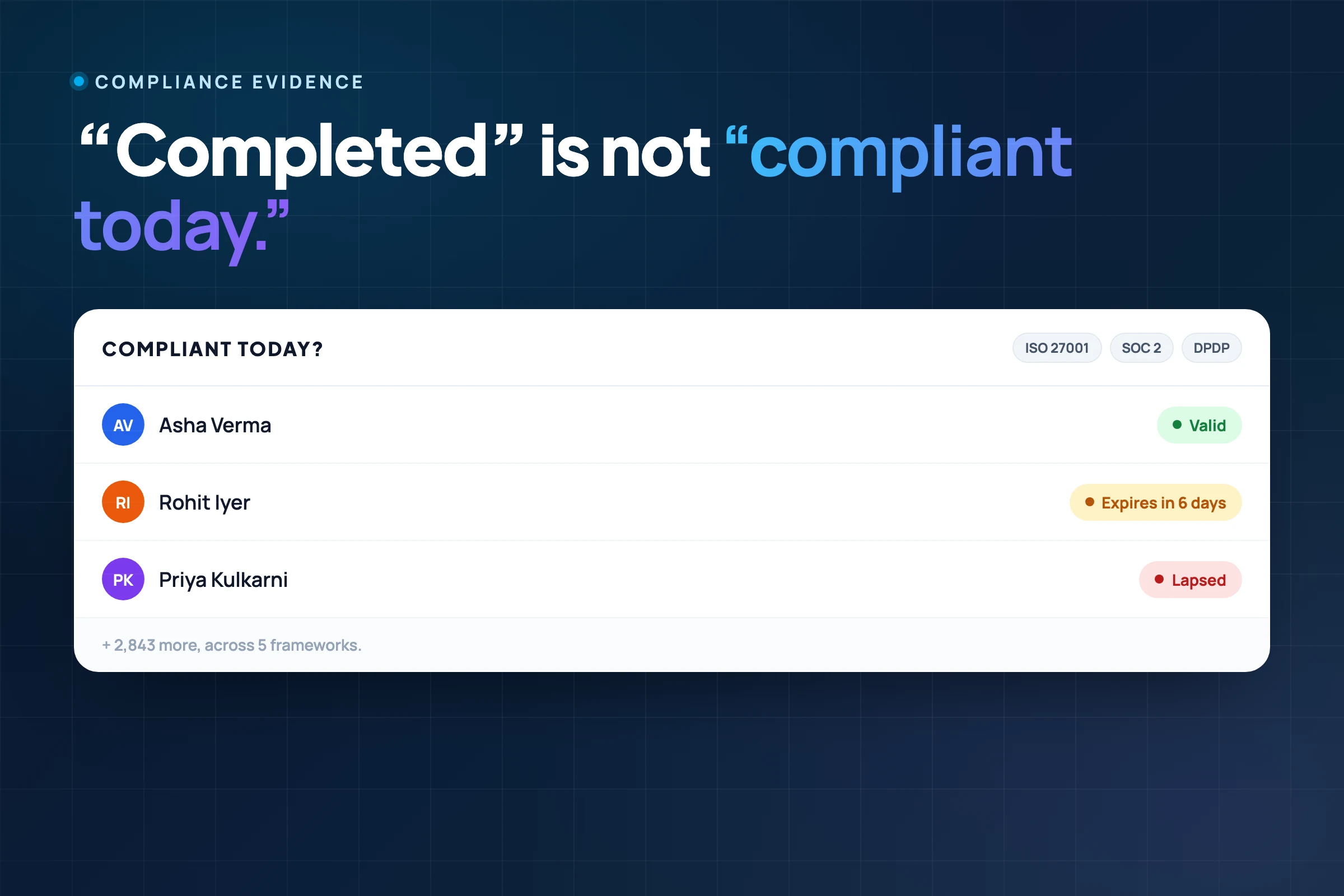
Learnify now tracks validity, not just completion: recertification cycles anchored to each person’s own completion date, read-and-understood attestation, access that re-locks when a certification lapses, and renewals that queue for approval. “Completed” and “current” are no longer the same question — which is exactly the question an auditor asks.
How to run this calculation for your own firm
You don’t need a vendor to find your hidden cost. Take last year’s audit cycle and count three things: analyst-hours spent assembling completion evidence, manager-hours spent chasing, and any seat time spent re-training people who had probably already completed. Multiply by loaded cost per hour. For every firm we’ve run this with, that number has been larger than the cost of the LMS.
If you’d like a second pair of eyes on the math, talk to our compliance team. If you’d rather see the evidence export yourself, start free and run one real assignment cycle end to end.
Start free — export your first evidence packKeep reading
More from the Learnify Journal

Your next audit should take an afternoon.
Start free and watch the evidence pack export from your own workspace — or book 30 minutes with a solution architect who has sat through the inspection you are preparing for.
info@habilelabs.io
20 seats · 30 days · no card
India · North America · Europe
HabileLabs Cloud, Data & AI